Pawpaw

Asimina triloba

size
Price
Regular price $89.99
Regular price Sale price $89.99
Save $-89.99
/

🌿 Save 10% on all Natives

Discount applied automatically at checkout!

  • North American Native
  • Secure payments
  • In stock, ready to ship
  • Backordered, shipping soon
Shipping calculated at checkout.
Shipping from $9.95 · Free on orders $100+
Leaves our nursery in 1-3 business days

Guaranteed to arrive healthy. details →

Pairs well with

Pawpaw grows the largest edible fruit native to North America, and it is the only place most people will ever get to eat one. Asimina triloba reaches 15 to 30 feet tall and wide, hardy from Zone 5 through Zone 8, with long drooping leaves up to a foot across that give it a tropical look nothing else this cold-hardy can match. Young trees want part shade and will scorch in full afternoon sun for the first few years, then take more light as they mature. Expect several seasons before the first fruit.

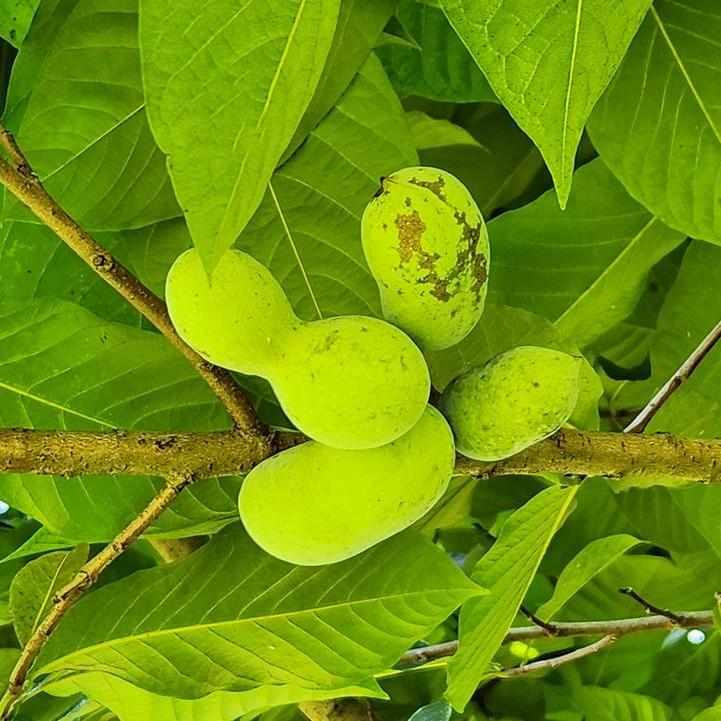
The fruit ripens in early fall, green and lumpy outside, custard-textured inside, tasting somewhere between banana and mango. It bruises easily and does not ship, which is why it never turns up in grocery stores and why growing your own is the only practical way to try one.

Plant two pawpaws if you want fruit, and make sure they are not the same variety. A pawpaw cannot set fruit with its own pollen, so two seedlings or two different named varieties will work where two of the same will not. The deep maroon spring flowers are pollinated by flies and beetles rather than bees, so fruit set varies year to year even with a partner nearby.

Pawpaw is the only plant zebra swallowtail caterpillars can eat. Deer avoid the foliage entirely, which makes it one of the few young trees you can put in the ground without a cage around it. It suckers into a patch over time, so give it room or plan to cut the runners.

Icon showing a plant with a ruler indicating size

Size at Maturity

Height 15'- 30' Spread 15'- 30'

icon of a thermometer

Growing Zone

USDA Hardiness Zones 5-8

Lowest Temperatures -20°F to -10°F

Light Requirements

Part shade - 4 to 6 hours of direct sun per day, mostly before midday

Host Plant For

Zebra Swallowtail (obligate host)

Wildlife Benefits

  • Attracts Songbirds

Native Range

AL, AR, DC, DE, FL, GA, IA, IL, IN, KS, KY, LA, MD, MI, MO, MS, NC, NE, NJ, NY, OH, OK, PA, SC, TN, TX, VA, WV

Special Conditions

  • Deer Resistant

Seasons of Interest

  • Spring
  • Fall

Planting and Care Guide

Planting Tips

Plant in moist, well-drained, slightly acidic soil. Space 10–15 feet apart. Water thoroughly after planting and mulch generously, keeping mulch away from the trunk. Plant two or more genetically different trees for cross-pollination and fruit production.

Care Tips

Water deeply and regularly the first 2–3 seasons- young pawpaws are somewhat slow to establish. Once established they are moderately drought tolerant. Pawpaws naturally sucker to form colonies over time; remove suckers if a single-trunk tree form is desired. Little pruning is needed. The large tropical-looking leaves may scorch in direct, hot afternoon sun when young- some shade protection is helpful until the tree is established. The large, custard-like fruit is sweet and delicious. Largely pest-free.

This site is protected by hCaptcha and the hCaptcha Privacy Policy and Terms of Service apply.

You may also like
Pawpaw
Pawpaw
American Beauties Native Plants®
$89.99
Dutchman's Pipe |Spotswood Greenery
Dutchman's Pipe
American Beauties Native Plants®
from $49.99
Rosa Virginiana |Spotswood Greenery
Virginia Rose
American Beauties Native Plants®
$61.99
Purple Coneflower |Spotswood Greenery
Purple Coneflower
American Beauties Native Plants®
from $40.99
Virginia creeper |Spotswood Greenery
Virginia Creeper
American Beauties Native Plants®
from $45.99
Trumpet Vine
Trumpet Vine
American Beauties Native Plants®
$65.99
Recently viewed