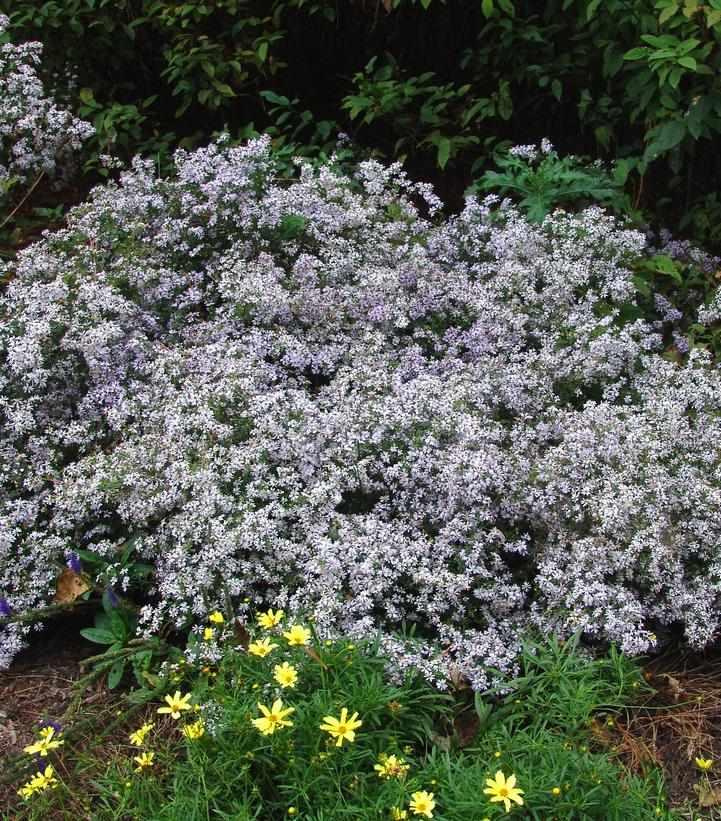
Blue wood aster brings pale blue into a shade planting in fall, which is a color the woodland asters do not offer. Symphyotrichum cordifolium is a native perennial growing 2 to 5 feet tall and 1 to 2 feet wide in part shade, hardy from Zone 3 through Zone 8, and it settles in over two seasons.
Clouds of small daisies open in late summer and continue through October, pale blue to nearly white with yellow centers, carried in loose sprays on branching stems. Asters are a keystone genus, and this one is one of the last nectar sources standing when the season closes. It feeds pearl crescent caterpillars.
The name comes from the heart-shaped leaves at the base of the plant, which are coarse and toothed and hold through the season.
This grows wild at woodland edges and in open woods, so it handles shade, root competition, and dry soil once established. It self-sows freely, which suits a naturalized planting or a woodland edge better than a tidy bed. It gets tall enough to lean in deep shade, and cutting the stems back by half in June makes a shorter, denser plant. Deer generally leave it alone.