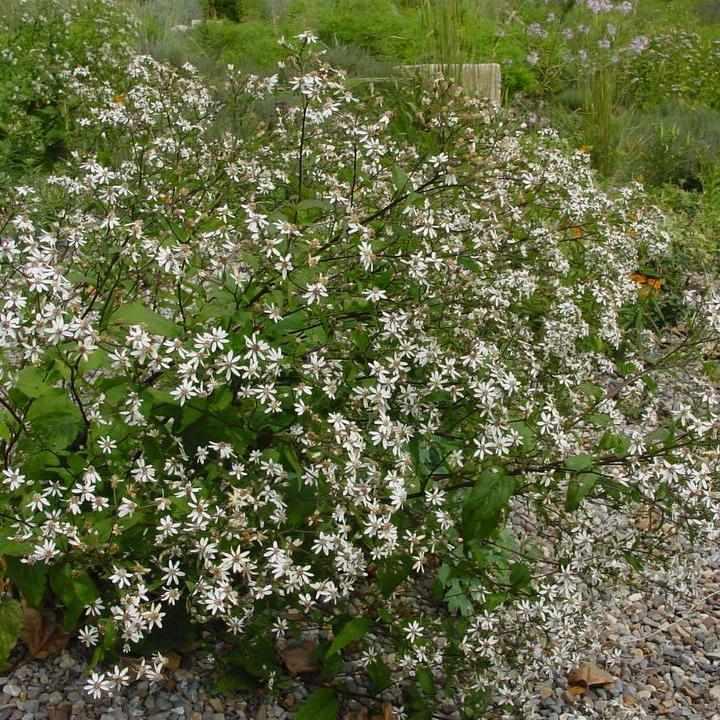
Eastern Star holds a tighter, more compact shape than the wild woodland aster, staying 18 to 24 inches tall and wide instead of stretching to three feet. This selection of the native Eurybia divaricata grows in part shade to full shade, hardy from Zone 3 through Zone 8, and settles in over two seasons.
Small white daisies with yellow centers float over the plant from late summer into October, carried on wiry stems so dark they read as black. That contrast is what makes the flowers stand out in low light.
Bloom comes at a point when most shade plantings have finished. Asters are a keystone genus, and this one draws late-season bees when little else is open, plus it feeds pearl crescent caterpillars.
Dry shade under mature trees suits it, and it handles root competition, drought once established, and poor soil. The compact habit means it stays where you put it rather than sprawling into neighbors, which makes it easier to place in a small woodland bed than the species. Deer generally leave it alone.