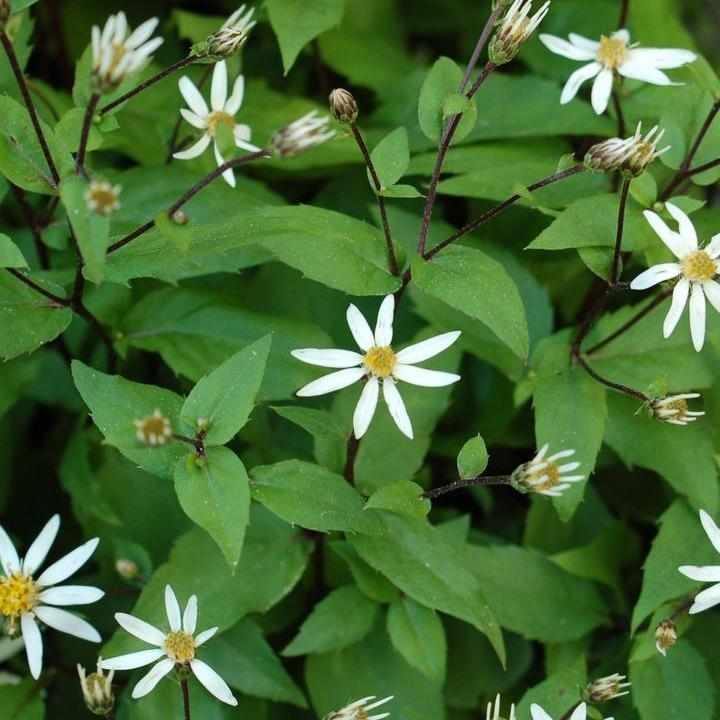
Woodland aster flowers in dry shade, which very few things do. Eurybia divaricata is a native perennial that opens clouds of small white daisies in late summer and fall under trees, on wiry near-black stems that show against the flowers. It grows 1 to 3 feet tall and wide, hardy from Zone 3 through Zone 8, and settles in over two seasons.
Bloom starts in August and runs into October, at a point when a shade planting has usually gone quiet. The flowers are loose and airy rather than dense, and they read bright in low light. Asters are a keystone genus, and this one draws late-season bees when little else is open, plus it feeds pearl crescent caterpillars.
The leaves are heart-shaped and coarse-textured at the base of the plant, giving it presence even before it flowers.
Dry shade under mature trees is where this one earns its place. It handles root competition, drought once established, and poor soil, and it self-sows modestly into a colony if you let it. Too much direct sun and it looks stressed. Deer generally leave it alone.