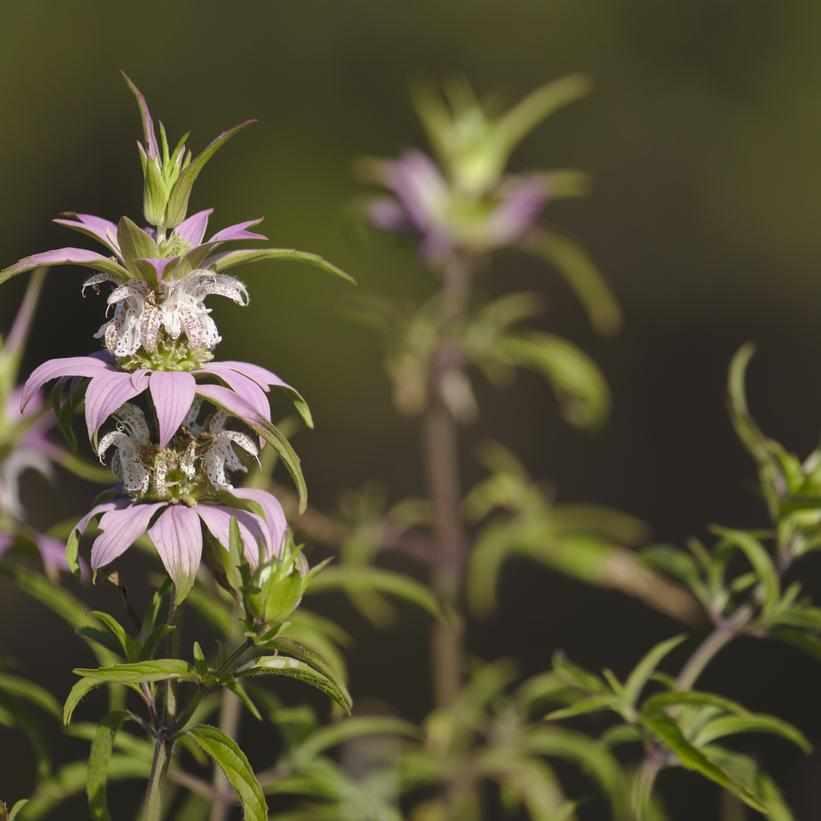
Spotted beebalm looks like nothing else in the genus. Instead of a single shaggy head, Monarda punctata stacks tiers of pale yellow flowers spotted with purple, each tier collared by pinkish-lavender bracts, so the whole stem resembles a pagoda. This native grows 12 to 36 inches tall and 12 to 24 inches wide in full sun to part sun, hardy from Zone 3 through Zone 8.
Bloom runs through midsummer into fall. The flowers are a heavy draw for solitary wasps and specialist bees that most garden plants never attract, and it feeds hummingbird clearwing moth caterpillars.
The foliage is aromatic, releasing a thyme-like scent when brushed, which is what keeps deer and rabbits away from it.
Spotted beebalm grows wild in sandy fields, dunes, and open dry ground, so it wants full sun and sharp drainage rather than rich soil. It handles drought and moderate road salt once established, and it is short-lived, persisting by self-sowing rather than by the original clump.