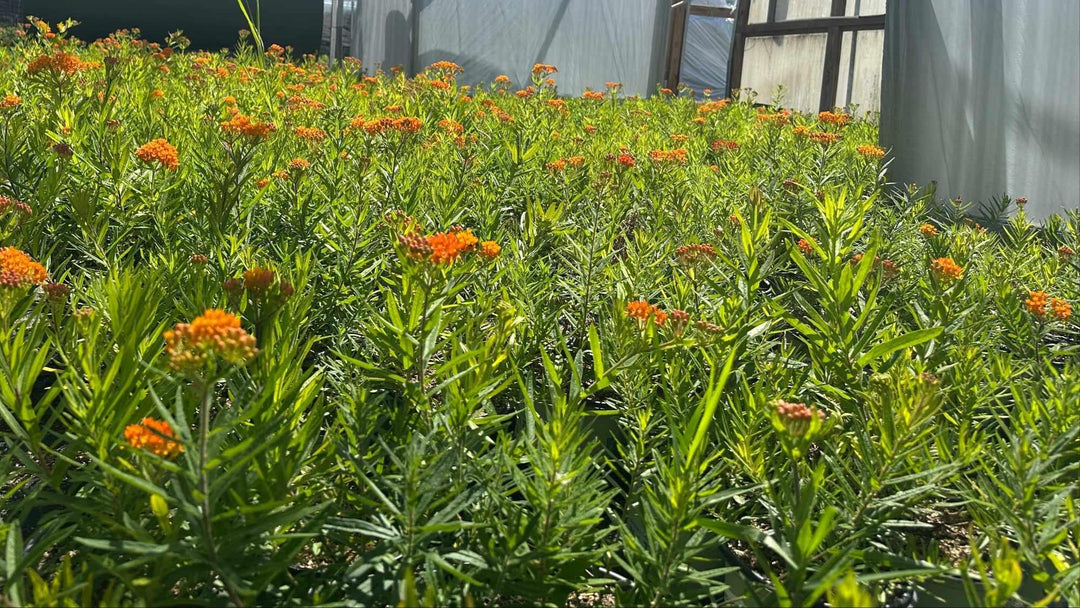
Butterfly milkweed is the native perennial for the hot, dry, difficult spot: the strip along a driveway, the top of a bank, anywhere the hose does not reach. Asclepias tuberosa grows 18 to 30 inches tall and 12 to 24 inches wide, hardy from Zone 3 through Zone 8 in full sun to part sun. It spends its first season building a deep taproot and does not look like much above ground until the second year, which is the trade for a plant that asks almost nothing of you afterward.
The flower clusters open in midsummer in a saturated orange that is hard to find in any other perennial, flat-topped and holding for weeks.
It is one of the plants monarch caterpillars can feed on, along with queen butterflies and the milkweed tussock moth, and the open flowers are a heavy nectar source for bees and butterflies while they are in bloom. Plant it in groups of three or more rather than singly.
Two things worth knowing. The taproot means it does not move well once settled, so choose the spot and leave it there. And it emerges very late in spring, weeks after everything around it, so mark the location or you will assume it died and dig into it. Once established it handles drought, salt, and deer without any help.