Pawpaw grows the largest edible fruit native to North America, and it is the only place most people will ever get to eat one. Asimina triloba reaches 15 to 30 feet tall and wide, hardy from Zone 5 through Zone 8, with long drooping leaves up to a foot across that give it a tropical look nothing else this cold-hardy can match. Young trees want part shade and will scorch in full afternoon sun for the first few years, then take more light as they mature. Expect several seasons before the first fruit.
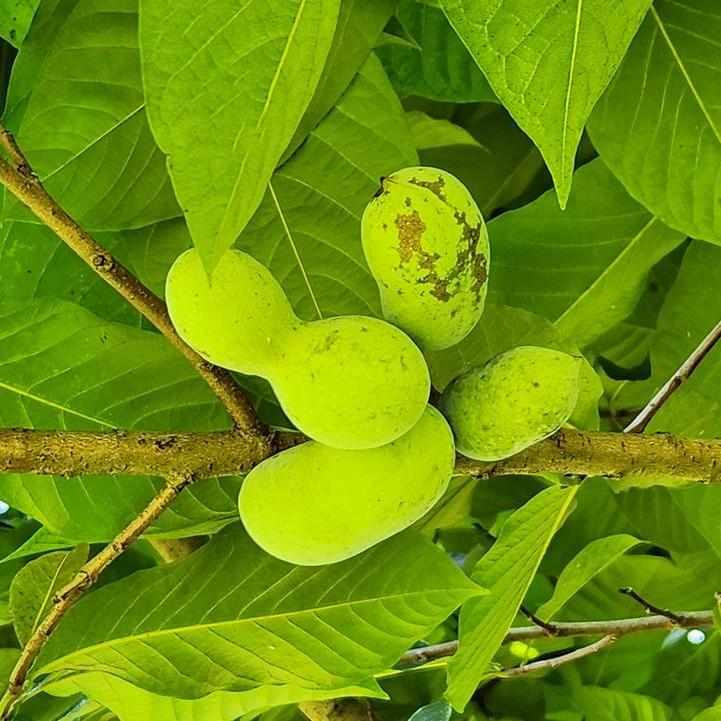
The fruit ripens in early fall, green and lumpy outside, custard-textured inside, tasting somewhere between banana and mango. It bruises easily and does not ship, which is why it never turns up in grocery stores and why growing your own is the only practical way to try one.
Plant two pawpaws if you want fruit, and make sure they are not the same variety. A pawpaw cannot set fruit with its own pollen, so two seedlings or two different named varieties will work where two of the same will not. The deep maroon spring flowers are pollinated by flies and beetles rather than bees, so fruit set varies year to year even with a partner nearby.
Pawpaw is the only plant zebra swallowtail caterpillars can eat. Deer avoid the foliage entirely, which makes it one of the few young trees you can put in the ground without a cage around it. It suckers into a patch over time, so give it room or plan to cut the runners.