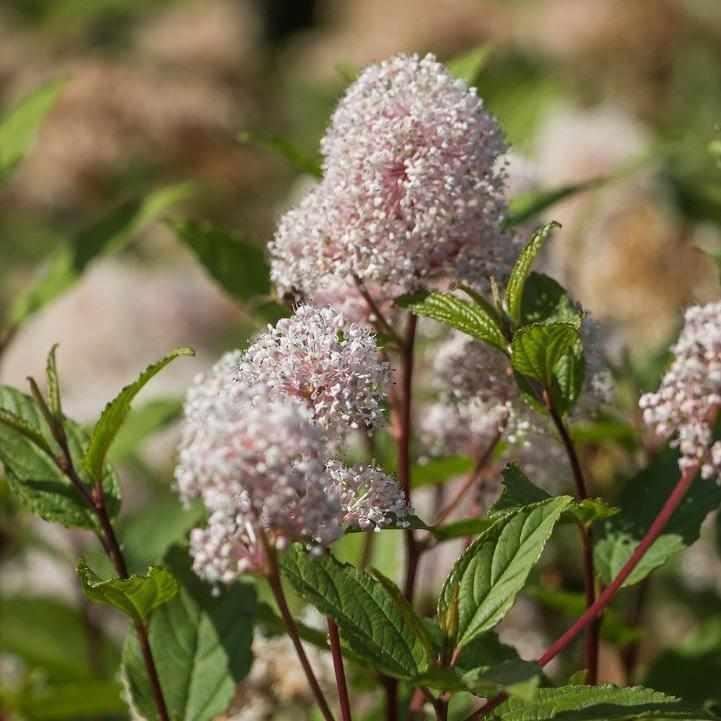
Clusters of small fragrant white flowers cover this compact native shrub in early summer, frothy enough to read as a cloud from a distance. Ceanothus americanus grows 3 to 4 feet tall and wide in part sun, hardy from Zone 4 through Zone 8.
The wildlife value is unusually high for a shrub this size. It feeds mottled duskywing, spring azure, and summer azure caterpillars, and the flowers draw a wide range of native bees, butterflies, and hummingbirds.
The name comes from the American Revolution, when colonists dried the leaves as a substitute for imported tea.
New Jersey tea puts down a deep woody root system that makes it drought-proof once established and nearly impossible to move afterward, so choose the spot and leave it. It wants well-drained soil and handles poor dry ground, and it fixes its own nitrogen. Deer leave it alone.