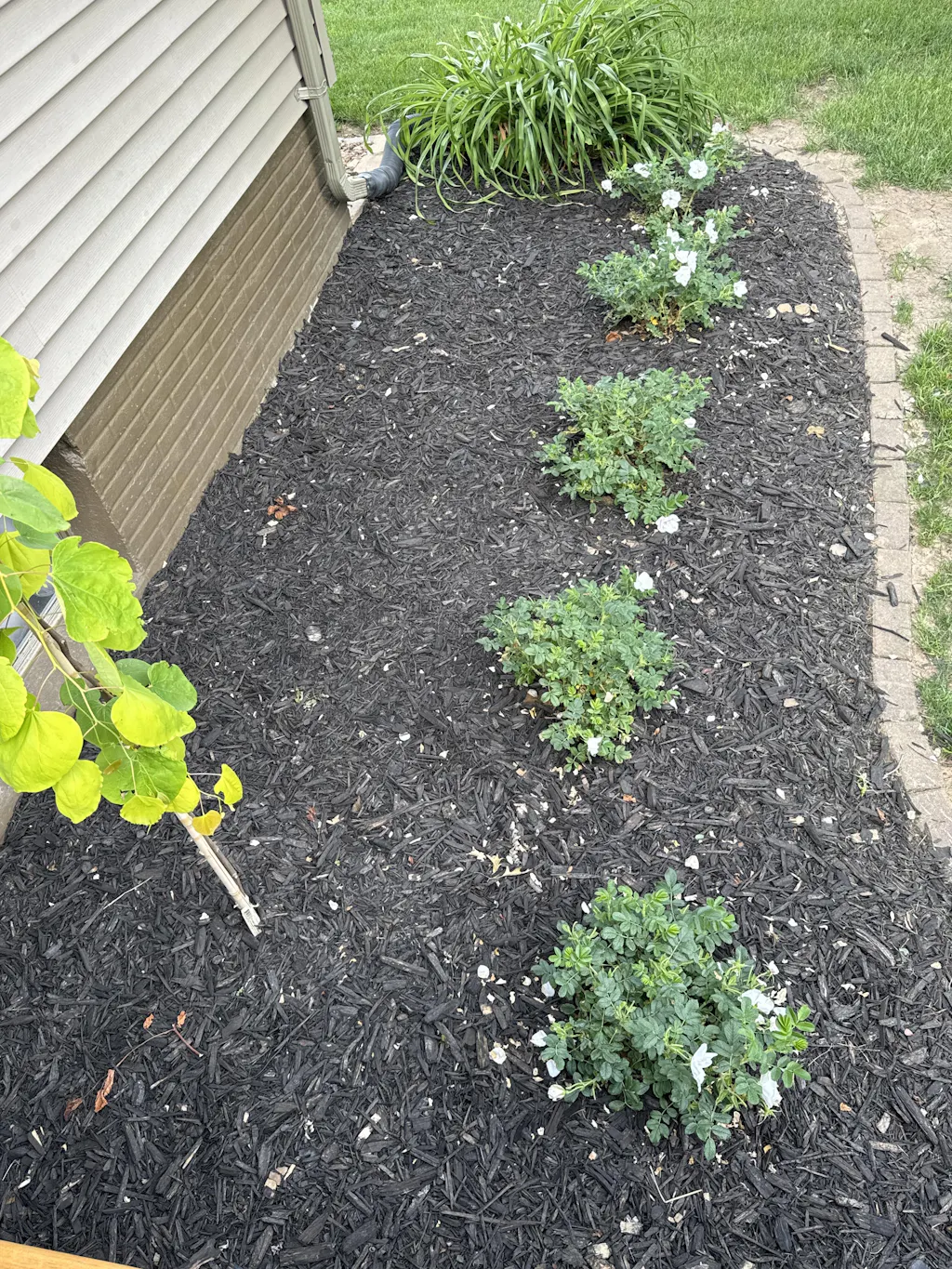
This is the rugosa rose for the spot where roses are not supposed to work. Rosa rugosa 'Blanc Double de Coubert' has been in gardens since 1892 on the strength of taking salt spray, sandy soil, wind, and general neglect and flowering anyway. It grows 4 to 5 feet tall and about as wide in full sun, hardy from Zone 4 through Zone 10, and settles in within a season.
The flowers are semi-double and white, loosely petaled and a little untidy in the way old roses often are, with a strong clove fragrance that carries several feet. It repeats rather than blooming once, heaviest in June and then in scattered flushes into fall, with the last few opening after most roses have finished. Heavy rain browns the white petals, which is the trade for a rose that asks nothing else of you.
The foliage is the other half of what you are buying. Deeply veined, rough-textured, and a clean deep green that stays that way with no spray program at all, at a time of year when the hybrid teas nearby are dropping leaves to blackspot. It turns clear yellow in fall.
Because the flowers are doubled, this one sets hips poorly. If the big red rugosa hips are what you are after, the single-flowered forms are the better choice. The canes are densely thorned, which makes it a good barrier and a poor neighbor to a walkway. Salt tolerance is high enough for coastal beds and for borders along a road that gets winter treatment.